How sober living works with evening outpatient treatment in Bergen County
You live in an NJ Sober Living house in Waldwick, Old Tappan or Closter, one of four Class F recovery homes licensed by the New Jersey Department of Community Affairs. If you are in outpatient treatment, you attend an outside licensed program on the schedule it sets, and the house drives you to evening sessions and back. The house is housing; treatment stays with the program.
Waldwick, Old Tappan and Closter, Bergen County, NJ Class F licensed by NJ DCA rides from the house $185–$240/week street addresses kept private for residents
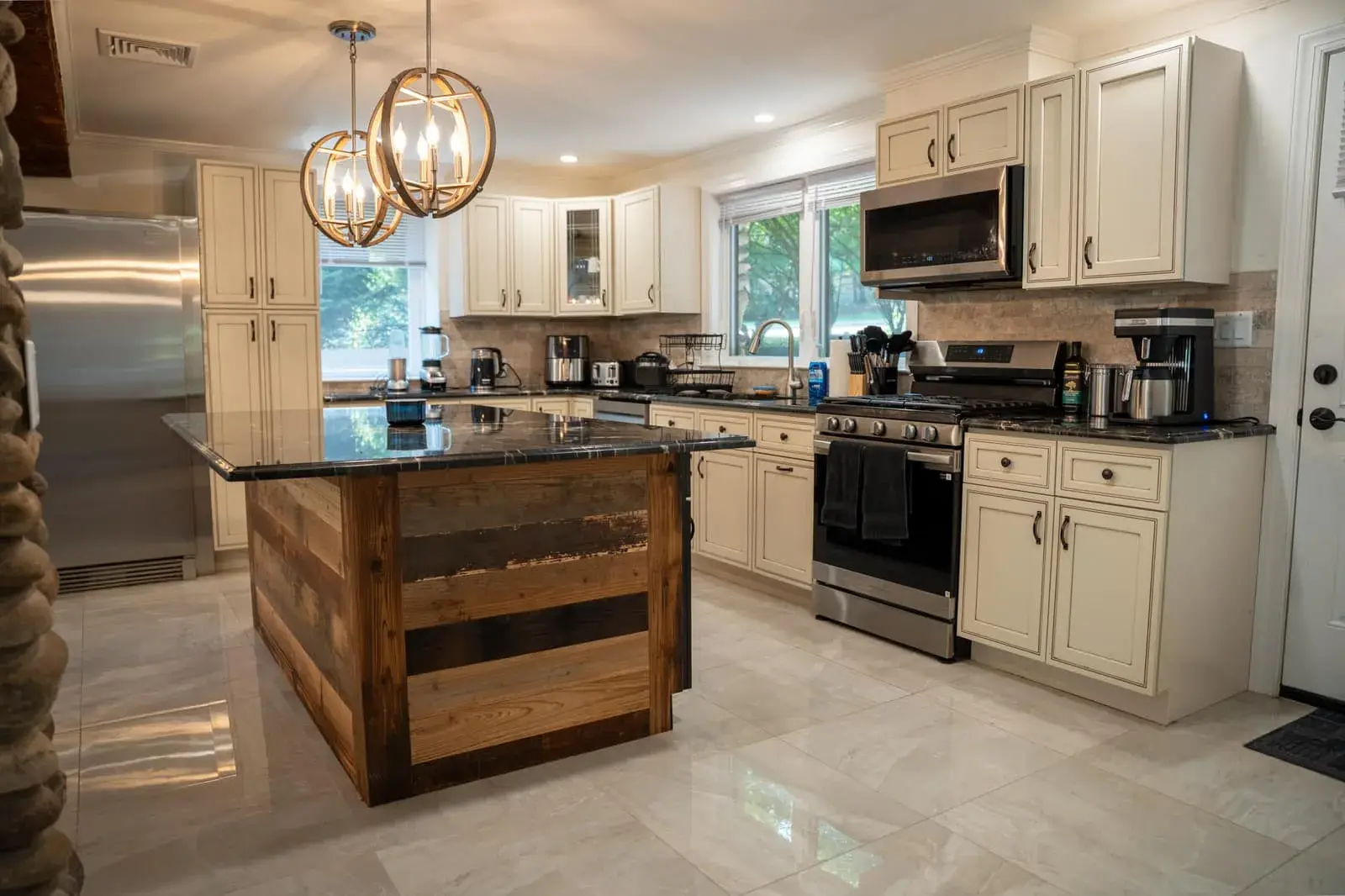
What the house handles, and what the outpatient program handles
The house gives you a place to live, the structure around it and a ride to treatment. The outpatient program gives you treatment.
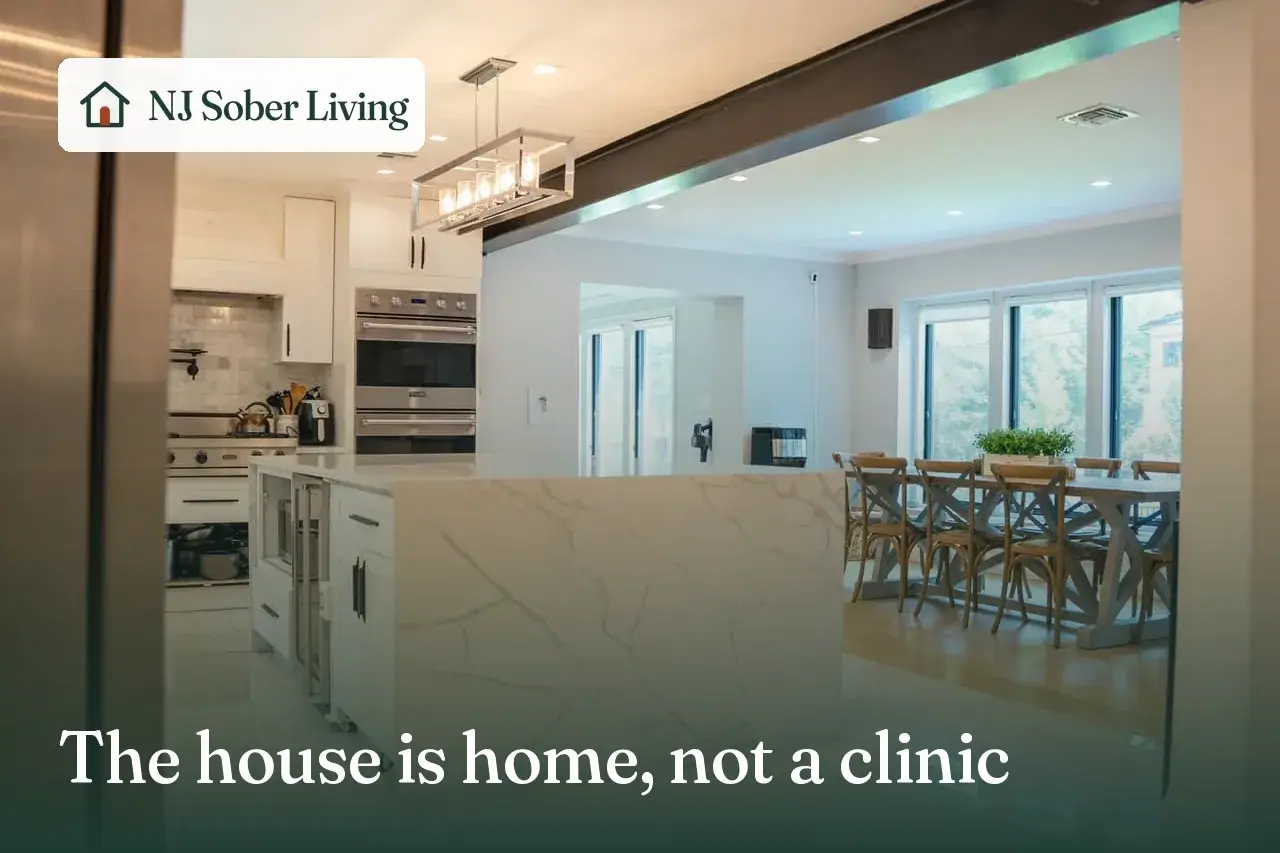
| The house | The outpatient program | |
|---|---|---|
| Where you live | A furnished, shared house on a residential street | Not handled by the program |
| Daily structure | Live-in operators, an operator on site 7 p.m. to 7 a.m., house management, behavioral health technicians, a curfew, house expectations | Not handled by the program |
| Drug testing | Periodic, in the house | Not handled by the program |
| Getting to sessions | Rides there and back on treatment nights | Not handled by the program |
| Treatment sessions | Not handled by the house | Sessions on the schedule the program sets |
| Treatment plan and medication | Not handled by the house | Set by the program and its clinicians |
| How often you attend | Not handled by the house | Decided with your therapist at the program |
What a week looks like on treatment nights and other nights
The day belongs to work, school or treatment. Residents in evening treatment ride to sessions in the house van.
- Morning
Up on the house schedule, breakfast in the shared kitchen, then out to work, school or a daytime commitment.
- Day
Your job, errands, exercise or a recovery meeting, within house expectations.
- EveningRide out, evening session, ride back
The house drives you to the outpatient program and home again.
EveningIn the house, under curfewDinner and the evening with housemates, with an operator in the house overnight.
How many treatment nights you have is set by your program, not the house. For a fuller picture of daily life, read a typical day in sober living.

How residents get to evening treatment without a car
The house drives residents to evening treatment and back, so you do not need a car or a valid license to make every session.
New to evening treatment? Our guide to evening IOP and sober living explains how the two fit together.
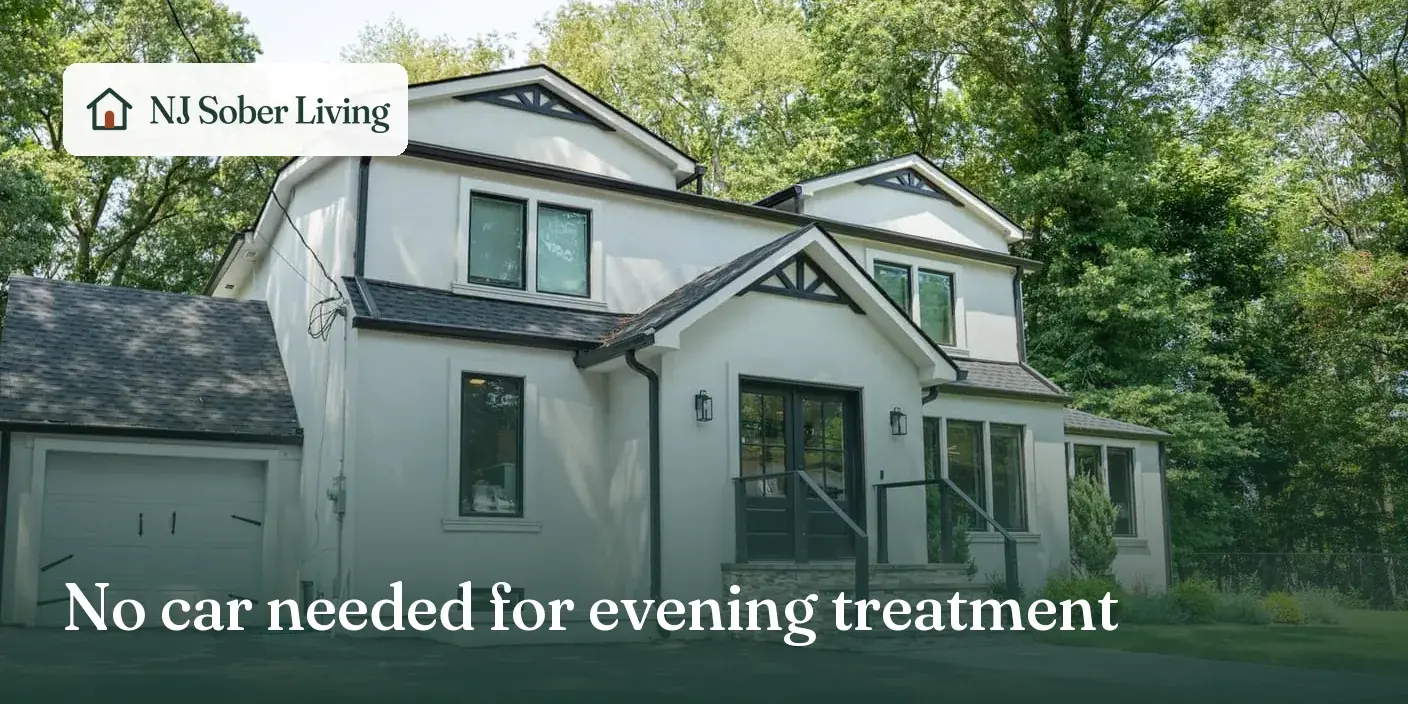
- Old TappanA few minutes from evening treatment
- ClosterResidence I and Residence IIBoth homes are a few minutes from evening treatment
- WaldwickIn western Bergen County, a longer drive that the house covers on treatment nights
The house rules that keep the structure in place
All four homes run on the same written house rules, and the house manager goes through them with you before you move in.
Call (201) 231-1066- OperatorsNew Jersey's Class F rules require two qualified operators for each home: at least one lives in the residence, and one is on site from 7:00 p.m. to 7:00 a.m. whenever residents are present.
- House management and techniciansOn top of what the state requires, house management and behavioral health technicians support the daily routine. Coverage is not around the clock; ask what it looks like at your home.
- CurfewEvery night, set by the house.
- Drug testingPeriodic testing in the house.
- House expectationsOne set of written rules for all four homes, gone over with you before move-in.
- RidesTo and from evening treatment and house outings.
Who sober living with outpatient treatment fits
Stepping down
You are finishing intensive outpatient or residential treatment and moving toward living on your own.
Working or in school
You are working, in school or in treatment, or ready to start one within 30 days of moving in.
Managing more than one thing
You live with anxiety or depression, or take MAT medication under outside psychiatric care.
Starting again
You have relapsed before and want accountability around you this time.
Missing the basics
Housing, transportation or day-to-day accountability is what stands in the way.
-

First responders
One house is set aside for police officers, firefighters, EMTs, paramedics and dispatchers.
About the first responder house
How placement works, from the first call to move-in
It starts with a phone call.
Who can move in. Men and women 18 and older who are sober at move-in and committed to staying sober, willing to follow curfew, chores and meetings, and honest during intake, including about medications. Residents must be working, in school or in treatment, or begin one of those within 30 days of moving in.
Rent and move-in. Rent is $185 to $240 a week, depending on the home and the room, and covers a furnished bed, utilities, Wi-Fi, laundry facilities for residents' use, and the house structure and support. The first week is due at move-in, and we confirm your exact rate and any additional fees before then. Rent is private pay, and payment days can line up with your paycheck. Insurance may cover outside treatment, but it generally does not cover rent. Read what sober living costs in New Jersey and whether insurance covers sober living.
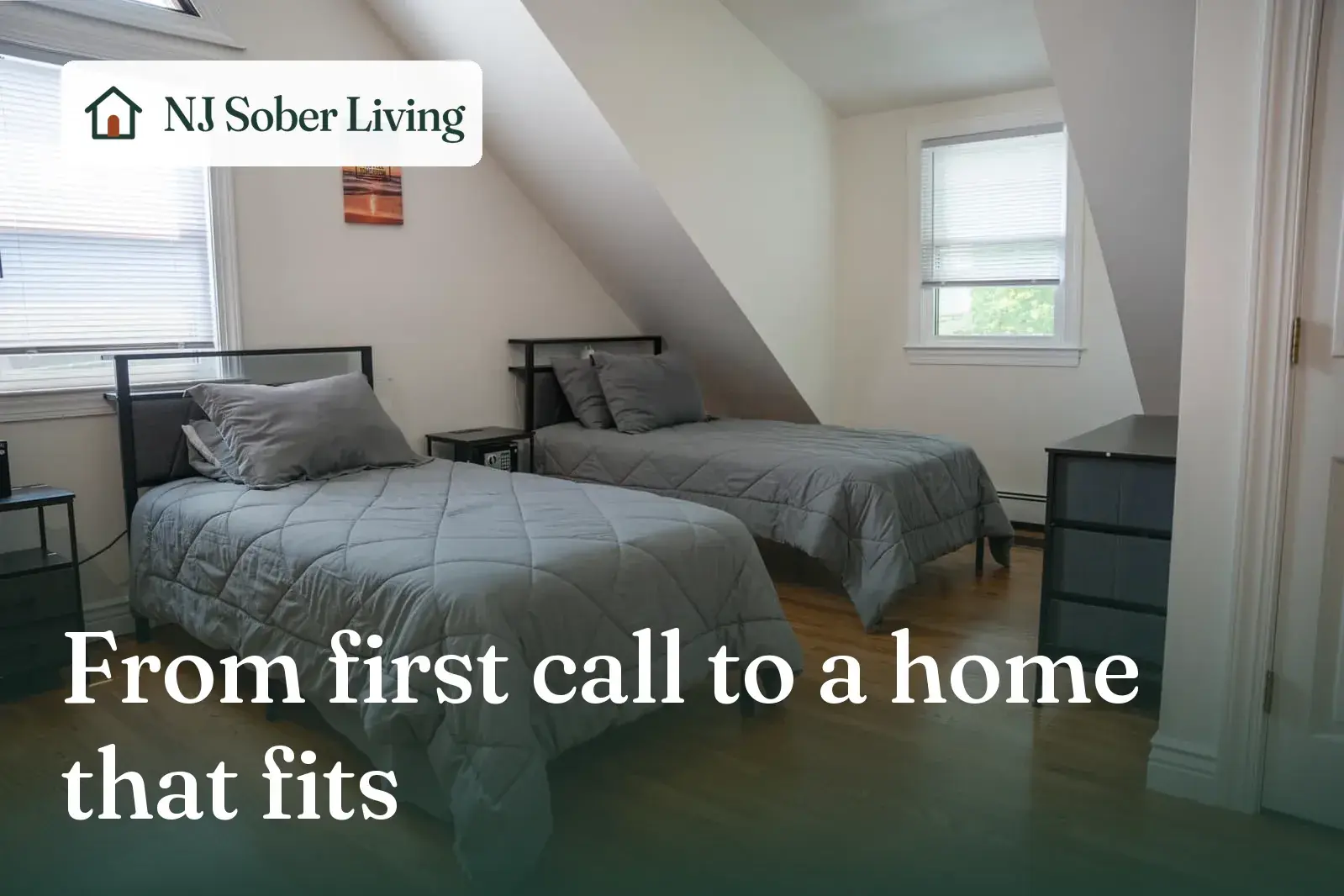
Call and talk it through
Tell us where things stand, including work, school or treatment and every medication you take. Clinical assessment happens with your outside treatment provider.
Match to a home with an open bed
Waldwick, Old Tappan or Closter, whichever fits, with your exact weekly rate and any additional fees confirmed.
Move in
The house goes through its rules with you first, and the first week is due at move-in. If you are in evening treatment, rides start with your first session.
Step toward living on your own
As stability holds, you plan the move to independent housing.
Questions about recovery housing and outpatient treatment
More answers, including cost, are on the FAQ page.
Not necessarily. Residents must be working, in school or in treatment, or begin one of those within 30 days of moving in. Treatment, when you have it, is at an outside licensed program; the house is housing.
No. Counseling and any medication decisions belong to the outpatient program. The house provides the home, the structure and the ride.
That depends on your program. You and your clinicians there set the schedule; the house drives residents to evening sessions and back.
Yes. Working is one of the ways residents meet the house requirement, along with school or treatment. Many outpatient programs meet in the evening, which leaves the day free.
No. The house drives residents to evening treatment and back.
Bedroom arrangements differ by house and by what is open when you move in. Ask on the call.
Rent is $185 to $240 a week, private pay, with the first week due at move-in. Insurance may cover outside treatment, but it generally does not cover rent. The FAQ page covers cost in more detail.
Yes, when it is taken as prescribed under outside medical or psychiatric care. Be honest during intake about every medication you take. Diverting or sharing medication is a serious violation of the house rules.
Check availability and talk through whether a house fits
Call, or use Check Availability and someone from the house will call you back.