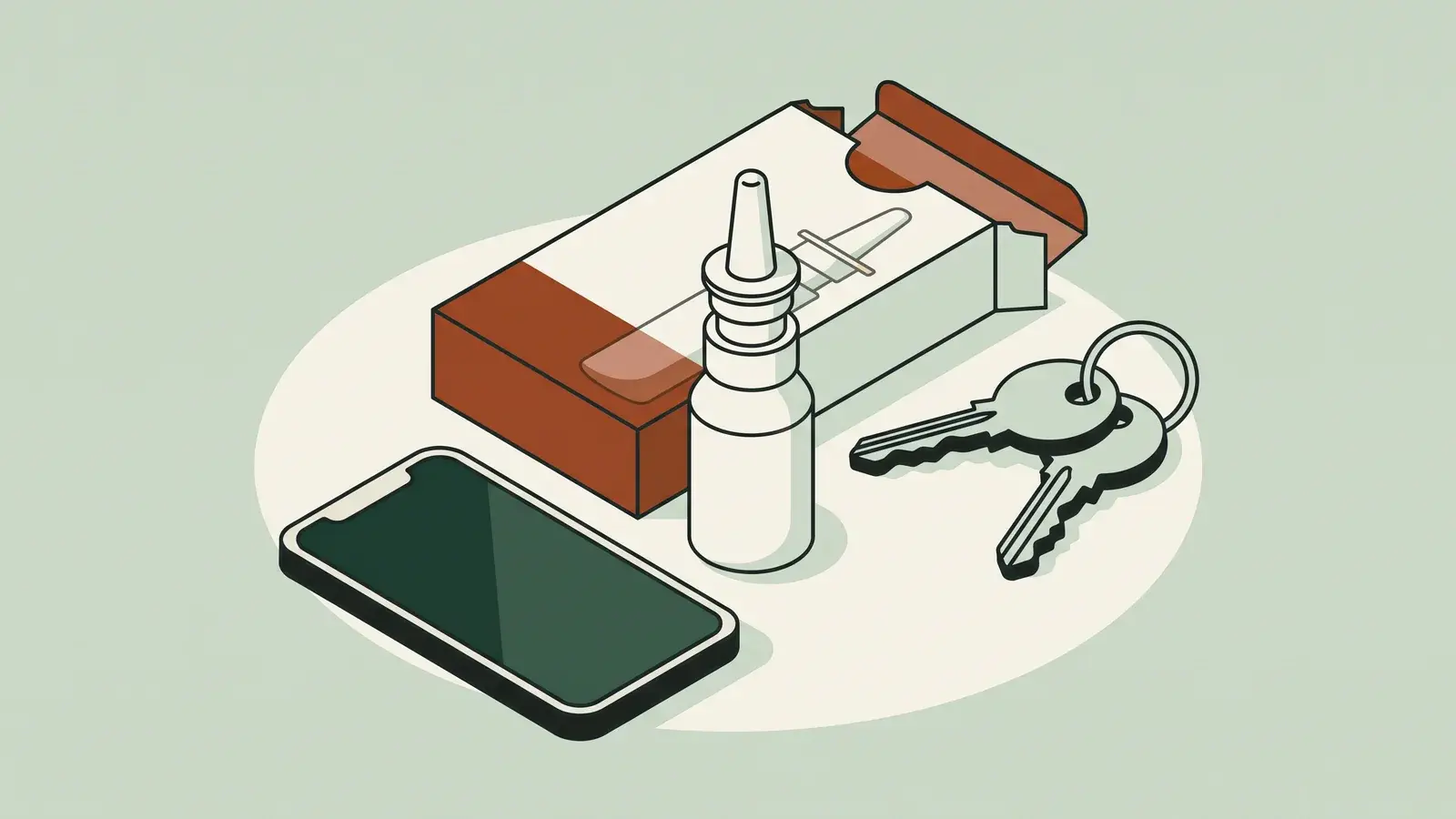
Call 911 if someone won't wake up, is breathing slowly, irregularly or not at all, or has blue, purple or gray lips. Then give naloxone if you have it, start rescue breathing and chest compressions if they aren't breathing, put them in the recovery position once they breathe on their own, and stay with them until help arrives (NJ DMHAS, 2024; NIDA, 2024). See the five steps.
First
Call 911. New Jersey's fact sheet puts the call before naloxone.
Naloxone
Free at participating New Jersey pharmacies, age 14 and up, no name or prescription needed.
The law
New Jersey protects people who call for help in an overdose (general information).
Reviewed against public records, October 2026. Sources: NJ Division of Mental Health and Addiction Services, NJ Department of Human Services, CDC, NIDA, NJ Legislature. Sources
What should you do if someone is overdosing?
Call 911 first, then give naloxone: that is the order on New Jersey's state fact sheet, and both steps are urgent(NJ DMHAS, 2024). Then help them breathe, turn them into the recovery position, and stay.
1
Check for a response
Ask if they're okay: shout their name, shake their shoulders, or firmly rub the middle of their chest with your knuckles.
2
Call 911
One of the most important steps: call so they can get immediate medical attention.
3
Give naloxone
Spray it into one nostril. No response? Another dose every 2 to 3 minutes, in the other nostril.
4
Help them breathe
Not breathing or gasping: 30 chest compressions (push hard and fast), then 2 breaths. Repeat until they're moving or breathing on their own, or help arrives. Can't give breaths? Do compressions only.
5
Recovery position, and stay
Moving and breathing on their own: on their left side, right leg and right arm crossed over the body. Stay until help arrives.
New Jersey's five overdose response steps, in the order of the state fact sheet (NJ DMHAS, 2024).
Once they breathe on their own: on the left side, right leg and right arm crossed over the body. This makes it hard for them to roll over and lessens the chance they choke on vomit. Stay until help arrives (NJ DMHAS, 2024).
If you have to step away
If you have to leave them, even to call for help or to get naloxone, put them in the recovery position first (NJ DMHAS, 2024). Some health departments list naloxone before the call; New Jersey's fact sheet lists the call first, and this guide follows it. Both are urgent.
When you call, tell the operator the person is unresponsive and not breathing, and give the address or a description of where you are (NIDA, 2024). Keep watching their breathing: if it stops, go back to step 4 (NJ DMHAS, 2024).
What are the signs of an opioid overdose?
An opioid overdose looks like someone who won't wake up or respond to your voice or touch, whose breathing is slow, irregular or has stopped(NJ DMHAS, 2024).
To check, shout their name, shake their shoulders, or rub the middle of their chest firmly with your knuckles (NJ DMHAS, 2024). On lighter skin, the color turns bluish purple; on darker skin, it turns grayish or ashen (NIDA, 2024). New Jersey's fact sheet says to give naloxone to anyone who shows signs of an opioid overdose (NJ DMHAS, 2024).
At a glance
Eight signs on New Jersey's fact sheet
Won't wake upNo response to your voice or touch
BreathingSlow, irregular or stopped
Skin and lipsPale skin, purple lips and fingernails
PupilsVery small
HeartbeatFaint
Arms and legsLimp
SpeechCan't speak
VomitingThey can choke on it (see step 5)
NJ DMHAS, 2024
What is naloxone, and how do you give the nasal spray?
Naloxone (brand name Narcan) is a medicine that reverses an opioid overdose, including from fentanyl, heroin and prescription opioids, and anyone can use the nasal spray without training(CDC, 2025).
It can restore normal breathing within 2 to 3 minutes in someone whose breathing has slowed or stopped, and more than one dose may be needed when stronger opioids like fentanyl are involved. It won't harm someone who is overdosing on drugs other than opioids, so it's best to use it if you think someone is overdosing (CDC, 2025).
Naloxone only reverses overdoses in people with opioids in their system, and it can bring on sudden withdrawal symptoms (NJ DMHAS, 2024). It also comes as an injection; the steps below are for the nasal spray.
What naloxone can't do: it won't reverse overdoses from other drugs like cocaine or methamphetamine, and it works in the body for only 30 to 90 minutes, while many opioids stay in the body longer, so the overdose can return after it wears off (NIDA, 2022). It also won't reverse the effects of xylazine, a sedative often mixed with fentanyl; give naloxone anyway, because opioids are usually involved too (CDC, 2024). Naloxone doesn't replace the 911 call, and it isn't a treatment for opioid use disorder (NIDA, 2022).
1. Open it. Peel the tab with the circle to open the package.
2. Hold it. Thumb on the bottom of the plunger, first and middle fingers on either side of the nozzle.
3. Tip in one nostril. Tilt their head back and support the neck with your hand. Gently insert the tip into one nostril until your fingers touch the bottom of their nose.
4. Press firmly. Press the plunger firmly to give the full dose.
Giving naloxone nasal spray, in the steps on New Jersey's fact sheet. No response, or not breathing normally? Another dose may be given every 2 to 3 minutes in the other nostril until they respond or help arrives (NJ DMHAS, 2024).
Where can you get free naloxone in New Jersey?
Anyone 14 or older can get naloxone nasal spray free and anonymously at participating New Jersey pharmacies through the state's Naloxone365 program, with no prescription and no name or reason asked(NJ DHS; NJ DMHAS, 2024).
Each visit gets one two-dose nasal spray kit (NJ DMHAS, 2024). Find a participating pharmacy on the state's list at nj.gov/humanservices/stopoverdoses, then ask the pharmacist for naloxone; you won't be asked for a prescription, your name or a reason.
Naloxone is also sold over the counter in every state (CDC, 2025), and New Jersey runs free community naloxone trainings in all three regions of the state (NJ DHS).
At a glance
Naloxone365 in three facts
Age 14+Anyone 14 or older can ask
No nameNo name, reason or prescription needed
2 dosesOne two-dose nasal spray kit per visit
NJ DHS; NJ DMHAS, 2024
Will you get in trouble for calling 911 in New Jersey?
New Jersey's Overdose Prevention Act protects a person who calls for help in good faith, and the person who overdosed, from arrest, charges, prosecution or conviction for possessing or using drugs or drug paraphernalia, when the evidence was found because help was sought(N.J.S.A. 2C:35-30, -31).
The person who callsNot arrested, charged, prosecuted or convicted for drug possession, use or paraphernalia, and parole or probation not revoked for those alone (2C:35-30).
The person who overdosedThe same protections when they, or someone for them, sought help (2C:35-31).
The person who gives naloxoneAnyone with naloxone may give it to someone they reasonably believe is overdosing, and is protected from criminal and civil liability for giving it in good faith (24:6J-4).
The law doesn't protect against other charges, such as drug trafficking, and it doesn't change the authority of police and emergency responders to investigate and secure the scene (N.J.S.A. 24:6J-2). The protections for callers date from 2013; the naloxone sections were updated in 2021 (P.L.2013, c.46; P.L.2021, c.152).
This is general information, not legal advice.
Print the overdose response card
One page with New Jersey's five steps in order, the signs, and where to get free naloxone. Put it on the fridge, or cut out the strip at the bottom for a wallet.
Printing happens in your browser. Nothing is stored or sent.
Signs of an Overdose and What to Do
Overdose response card
If someone may be overdosing
Signs: won't wake up or respond; slow, irregular or no breathing; pale skin, purple lips or fingernails; very small pupils; faint heartbeat; limp arms and legs; can't speak; vomiting.
Check for a response. Shout their name, shake their shoulders, or firmly rub the middle of their chest with your knuckles.
Call 911. So they can get immediate medical attention.
Give naloxone. Spray into one nostril. No response? Another dose every 2 to 3 minutes, other nostril.
Help them breathe. Not breathing or gasping: 30 compressions (push hard and fast), then 2 breaths. Repeat until they move or breathe on their own, or help arrives. Can't give breaths? Compressions only.
Recovery position, and stay. On their left side, right leg and right arm crossed over the body. Stay until help arrives.
Free naloxone: participating New Jersey pharmacies, age 14 and up, no name or prescription. List: nj.gov/humanservices/stopoverdoses
Source: NJ Division of Mental Health and Addiction Services, Opioid Overdose Response & Prevention Information, rev. 7/23/24. General information, not medical advice.
NJ Sober Living (201) 231-1066ReachNJ treatment line 1-844-732-2465In an emergency, call 911
CALL 911GIVE NALOXONEHELP THEM BREATHERECOVERY POSITIONSTAY
Why is overdose risk higher after rehab or detox?
Overdose risk is greater when opioid tolerance has changed after a stretch of not using, such as after jail, detox or drug-free treatment, and anyone who restarts needs to start at a lower dose(NJ DMHAS, 2024).
Mixing opioids with benzodiazepines or alcohol, or taking more than before, raises the risk too (NJ DMHAS, 2024). If a relapse happens, what to do after a relapse walks through the next steps, and the warning signs of a relapse covers the earlier signals.
For addiction treatment in New Jersey, ReachNJ answers 24 hours a day, 7 days a week, at 1-844-732-2465(NJ DHS).
What New Jersey's fact sheet advises
Don't mixOpioids with benzodiazepines or alcohol.
Start lowerAfter time off opioids, tolerance has changed.
Teach the people around youFamily and friends should know how to respond.
Keep naloxone on handIf you or someone you know takes opioids.
Tell people you carry itYou can't give naloxone to yourself (CDC, 2025).
Overdose and naloxone questions
Yes. Naloxone reverses overdoses from opioids, including fentanyl, heroin and prescription opioid medications, and more than one dose may be needed when stronger opioids like fentanyl are involved (CDC, 2025).
No. Naloxone won't harm someone who is overdosing on drugs other than opioids, so it's best to use it if you think someone is overdosing, and still call 911 (CDC, 2025).
No. You can't use naloxone on yourself during an overdose, so let the people around you know that you carry it (CDC, 2025).
Stay with them until emergency help arrives, or for at least four hours, to make sure their breathing returns to normal (CDC, 2025). Someone who was given naloxone may overdose again or choke on vomit (NJ DMHAS, 2024).
Yes. Naloxone works in the body for only 30 to 90 minutes, and many opioids stay in the body longer, so a person can still have the effects of an overdose after it wears off. That is why calling 911 matters even after naloxone works (NIDA, 2022).
No. Anyone 14 or older can get naloxone nasal spray free at participating New Jersey pharmacies without a prescription, and naloxone is also sold over the counter (NJ DMHAS, 2024; CDC, 2025).
Naloxone can bring on sudden opioid withdrawal symptoms, including higher blood pressure, constipation, muscle pain or spasms, headache, and nasal irritation, pain, dryness or a stuffy nose (NJ DMHAS, 2024).
Sources
This guide is general public-health and legal information from the sources below, not medical or legal advice. In an emergency, call 911.
NJ Division of Mental Health and Addiction Services. Opioid Overdose Response & Prevention Information (fact sheet, rev. 7/23/24). nj.gov. Accessed October 30, 2026.
NJ Department of Human Services. Stop Overdoses: Naloxone Distribution at Participating Pharmacies (Naloxone365). nj.gov. Accessed October 30, 2026.
Centers for Disease Control and Prevention (2025). Lifesaving Naloxone. cdc.gov. Accessed October 30, 2026.
National Institute on Drug Abuse (2024). Understanding an Overdose and How to Respond to One. nida.nih.gov. Accessed October 30, 2026.
National Institute on Drug Abuse (2022). Naloxone DrugFacts. nida.nih.gov. Accessed October 30, 2026.
Centers for Disease Control and Prevention (2024). What You Should Know About Xylazine. cdc.gov. Accessed October 30, 2026.
New Jersey Legislature. P.L.2013, c.46, Overdose Prevention Act (N.J.S.A. 24:6J-1 to -6; 2C:35-30, -31). pub.njleg.gov. Accessed October 30, 2026.
New Jersey Legislature. P.L.2021, c.152, amending N.J.S.A. 24:6J-2 to -5 (opioid antidotes). pub.njleg.state.nj.us. Accessed October 30, 2026.